
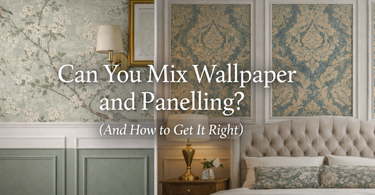
Can You Mix Wallpaper and Panelling? (And How to Get It Right)
Wallpaper and panelling are two of the biggest interior design favourites right now — so it’s no surprise people keep asking the same question:
Can you use them together without it looking too busy?
The short answer is yes, absolutely. When done well, wallpaper and panelling can transform a room, adding depth, character and a really polished, designer feel.
Here’s everything you need to know to get the look right.

Why Wallpaper and Panelling Work So Well Together
Panelling adds architectural interest, structure and texture to walls, while wallpaper brings pattern, colour and personality.
According to Homebuilding, wall panelling is making a big comeback and works beautifully in a wide range of interiors — from classic wainscoting to modern designs — making it a perfect partner for wallpaper. (Homebuilding)
Together they can:
-
Break up large expanses of plain wall
-
Make rooms feel taller and more balanced
-
Add warmth and visual interest
-
Create a clear focal point
The Most Popular Ways to Combine Wallpaper and Panelling
1. Panelling on the Bottom, Wallpaper on the Top
This is the classic approach. The panelling — usually painted — covers roughly the lower half of the wall, with wallpaper above.
This works especially well because it:
-
Keeps bold wallpaper from overwhelming the room
-
Adds protection in high-traffic areas
-
Creates a timeless, elegant look
You’ll see this technique used in period homes and contemporary spaces alike. The key is choosing a wallpaper that balances with the paint colour — pick a tone from the wallpaper to paint the panelling for a cohesive feel.

2. Wallpaper Inside Panelling Frames
If you want something more decorative and refined, this is a stunning way to integrate both elements.
Here, the wall is fully paneled, and wallpaper goes inside each frame like artwork.
This look is particularly striking in:
-
Living rooms
-
Bedrooms (especially behind the headboard)
-
Dining rooms
This approach has been praised for how it adds dimension without clutter — especially when using wallpapers with texture or sophisticated motifs. (Milton & King)

3. Feature Wallpaper Wall + Painted Panelling Elsewhere
If you’re nervous about too much pattern, use wallpaper on one feature wall and paint panelling on the others.
It’s a clever way to:
-
Zone a space
-
Highlight architectural features
-
Keep the overall scheme calm and balanced
This is great for open-plan homes or rooms where you want a softer look overall.
Choosing the Right Wallpaper for Panelling
Not all patterns play well with panelling — but a few simple rules help:
Scale and Balance
Very large patterns can feel top-heavy, especially in smaller rooms. Mid-scale repeats or trailing designs tend to be easier on the eye.
Texture Helps
Textured wallpapers (like grasscloth effects or linen looks) add tactile interest without competing with the panel mouldings.
Light and Colour
In smaller or darker rooms, lighter wallpapers keep things feeling open. In larger spaces or cosy rooms, darker patterns can add depth and richness. For general wallpaper tips (like preparation and matching with room size), Planner 5D has a good primer. (Planner 5D)
A Clever Alternative: Wood Panel Effect Wallpaper
If you love the look of panelling but want a simpler, more flexible option, wood panel patterned wallpaper can be a brilliant alternative. These designs give the visual effect of traditional panelling — think tongue and groove, shaker-style panels or subtle wood textures — without the cost, mess or permanence of installing real panels. They’re especially popular in rented homes, upstairs rooms or anywhere you want the panelling look without committing to joinery. Paired with painted walls or even used as a feature wall, panel-effect wallpaper adds depth and character while being far quicker to install and easy to change in the future.

Best Rooms for Mixing Wallpaper and Panelling
Some spaces feel naturally suited to this combo:
-
Hallways & staircases – Adds welcome personality and protects walls
-
Dining rooms – Elegant and characterful
-
Bedrooms – Beautiful behind the bed
-
Home offices – Adds interest without distraction
-
Living rooms – Perfect for feature walls
For more inspiration and examples of panelling styles you could pair with wallpaper, Ideal Home has a comprehensive gallery of ideas. (Ideal Home)
Common Mistakes to Avoid
Even though the look is timeless, a few pitfalls can trip people up:
-
❌ Pairing very busy wallpaper with highly detailed panelling
-
❌ Installing panelling too high in rooms with low ceilings
-
❌ Ignoring colour harmony between paint and wallpaper
-
❌ Trying to fit every design trend into one space
A good rule is: let one element — wallpaper or panelling — be the star, and keep the other supportive.
Final Thoughts
Mixing wallpaper and panelling is one of the easiest ways to elevate a room and give it a thoughtful, layered look.
With thoughtful colour choices, balanced proportions and a bit of planning, the result feels both stylish and timeless — perfect for everything from period homes to modern interiors.
If you’re unsure, sampling wallpaper and paint together before committing makes all the difference.
)